Showing posts with label Biology. Show all posts

Thursday, July 16, 2015

A Biological Perspective on Human Life

 ~~~~~~~~~~~~~~~~~~~~~~~~
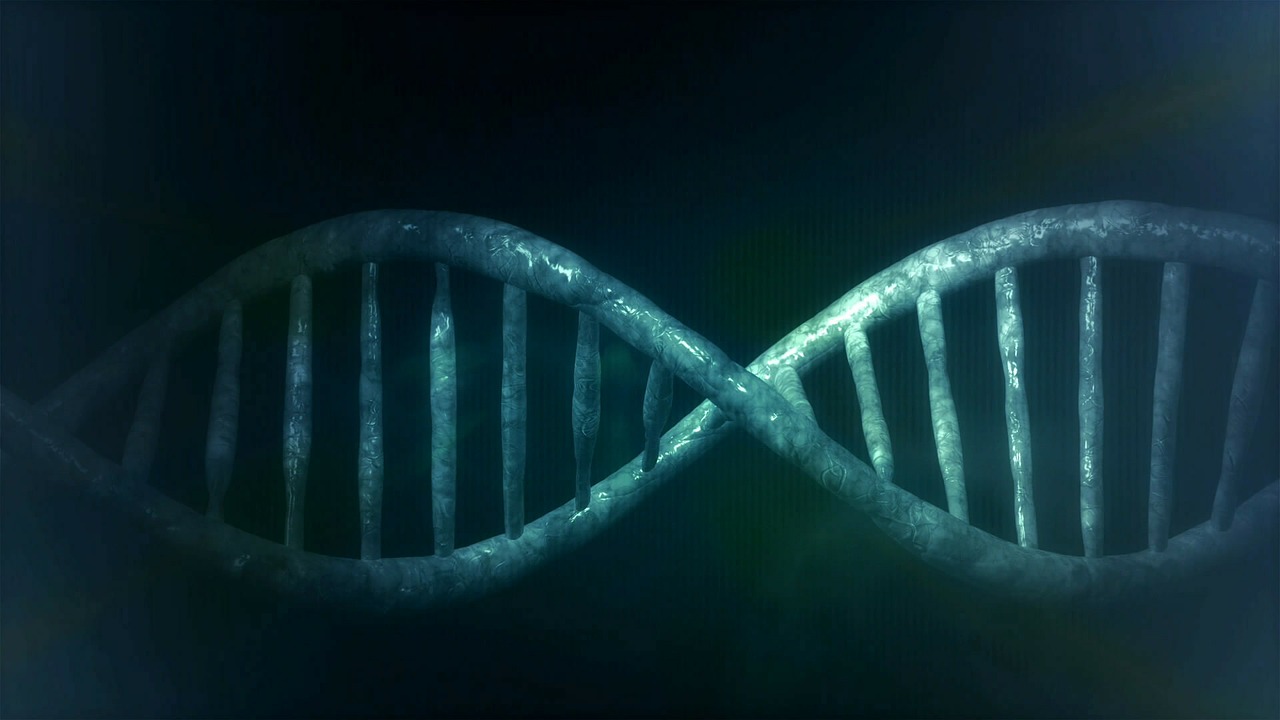
DNA is what makes a species what it is. The Genome (a complete set of DNA) is completely responsible for the biological identity of an organism. True, the environment can influence development, but the environment can only shift variables one way or the other based on what is already made possible by the Genome.

DNA is made of long strands of Nucleotides, of which there are 4: Adenine, Guanine, Thymine, and Cytosine (A, G, T, and C). These four Nucleotides are the four Letters in the alphabet of life. The Letters form Words, all of which are 3 Letters long. Three Letter triplets of Nucleotides code for 20 Amino Acids. The combinations of letters results in 20 Words.

The 20 Words are combined to form a multitude of Sentences, ranging from a 20 to 33,000 Words in length: Amino Acids are the Words that are strung together to form the Sentences, called Proteins. Proteins perform most of the functions of living cells.

The combination of all the Sentences makes up a Book. A Genome is a Book. The Book is made of DNA.

In Books, the Sentences dictate the story. In the Genome, Proteins dictate the function.
~~~~~~~~~~~~~~~~~~~~~~~~

A book is defined by its letters. If you change one letter in a book, the book isn't exactly what it used to be. Change 10 letters, and it is a bit different. Change 100 letters--even more. Change 50% of the sentences, and 50% of the identity of the book has changed.

Each of us is a unique book, filled with a unique set of letters. The entire book is the dictionary entry under the word "You". The dictionary of life contains entries for every organism that ever lived--each perfectly defined by its unique genome.

Here is one tiny bit of the dictionary entry for one organism, the "human" whose genome was sequenced in The Human Genome Project:

https://vimeo.com/11711801

We "humans" are very similar to each other. We share over 99% of our letters in common.

As we look into the evolutionary past, however, we run into "species" that share 99% of our letters, and others that share 98%. Still others share 97%, and 94%. We keep moving backward in evolutionary time and we see forks in the road--several groups with 84% of the same letters, but none of them with the same differences, and EACH individual in EACH group never sharing exactly the same letters as its parents or offspring.

Every book is unique.

Biological life is not black and white. Biological life is shades of gray.

Define for me, then, a biological human.

Yes, you could assign groups of individuals in specific places that have the ability to reproduce with one another a species name--but this is merely a crutch to learn things about our world at the present time--not a suitable definition for actual species. If we grant that definition, then all species are equivalent. We simply shift the time range from the present back 30 years, and then 30 more years, and then 30 more all the way back to the origin of species, and the whole while we have groups of individuals in specific places that have the ability to reproduce with one another--but at the end we have modern "humans", and at the beginning we have a single celled organism or protobiont.

If we grant that definition, all books are "Moby Dick".

It is far better to define each book as it is--by its unique sequence of letters. Yes, genres and sub-genres can be argued over, but such things are subjective matters of opinion. There is no invisible wall that truly separates one genre from another--no magical percentage that can objectively differentiate between groups of letters.

Is what makes humans "human" a subjective matter of opinion?

Biological life comes in shades of gray.

Based on biology, all of us are individuals--we must look to the philosophers if we want to know anything more.

Thursday, January 1, 2015

One Reason Why Cancer is So Hard to Treat


A few years ago, I saw a local news story about a "cure" for cancer that a man had developed in his garage using a modified microwave and small metal orbs. The idea was that the metal orbs could be placed inside biological material, the microwave device could be turned on, and the tissue around the metal balls would be killed. To prove the concept, the man put some orbs into a hotdog, turned on the machine, and sure enough, the area around the metal orbs "died".

Seems like with careful calibration, one could simply put some metal orbs inside of tumors and zap them away once and for all, right?

Obviously this technique has not cured cancer (for multiple reasons). In this post, I will point out one of the fundamental reasons why cancer is so difficult to cure in hopes that the public will be better educated about this condition. For all you science people out there, I am way oversimplifying things. I know it is way more complicated than what I am about to describe. :)

I will start by explaining why bacterial and fungal infections (unlike cancer), and generally simple to treat.

If, lets say, a prokaryotic organism infects a person (eukaryotic), how do we get rid of the prokaryotic organism? If our only goal was to kill the prokaryotes (the bacteria that are taking up residence inside the body), and we didn't care whether or not the host died, we could submerge the host in a vat of extremely concentrated acid. This would kill the prokaryotes. Unfortunately, there would also be some inconvenient side effects for the host (death).

So, instead of using a giant vat of acid, we find other ways to kill the prokaryotes that don't involve serious side effects for the host (such as death). We do this by finding a poison that hurts prokaryotes, but doesn't hurt humans (made of eukaryotic cells).

This is usually pretty easy to do. I will illustrate why using pictures.


These are standard infectious prokaryotic warriors.


This is a human eukaryotic cell.


The point of this? Even if you don't understand cell biology very well, you can see that the prokaryote and the eukaryote are VERY different. This means that they function in very different ways. Because of that, it is relatively simple to find a poison that will kill prokaryotes, and not kill eukaryotes. We call these poisons "antibiotics".


The same is true for fungal infections.

Here is a fungal ambusher. They are fierce in combat.


Note: While my other drawings were at least somewhat accurate, my fungus drawing is not accurate on the cellular level, at all. But hey, I wanted to draw a mushroom.

Point stays the same--fungal cells are very different than eukaryotic cells, so they are relatively easy to kill without hurting the host!

And now we return to cancer. Why is it so difficult to treat?

Once again I will use pictures to demonstrate.

Here is a human eukaryotic cell:

And here, is a human eukaryotic cell.

The only difference is that the second one is cancerous. No, wait... The first one is cancerous... No... Um...

You see, cancer cells are tough to distinguish from human eukaryotic cells, because, well, they are human eukaryotic cells (with a few modifications that happen to make them very, very lethal). They multiply quickly, they ignore signals from other cells, they force blood vessels to provide them with supplies, they leave their normal homes and create colonies in other parts of the body. They are human cells that have "gone rogue".

Cancer cells are you.

Because of this, it is VERY hard to find a poison that will hurt the cancer cells and not hurt the human "host". The differences are so small, that treatment for cancer often turns into an arms race. The poisons that hurt cancer also hurt the human--and in order to fully kill the cancer, it almost takes killing the human.

In addition, just like human cells, cancer cells can adapt to toxins, pumping "anti-cancer" drugs out of their cytoplasms before they can take effect. Cancer cells are also diverse--there isn't just one kind.

This means that we need to find poisons that will distinguish each individual kind of cancer from nearly identical human cells.

This is why funding is needed for further research in the fight against cancer. We CAN identify the differences between human cells and cancer cells, and we CAN develop drugs that will take advantage. Tremendous progress has already been made. But due to the wide array of cancer types and the ability of cancer cells to change, especially in response to treatments, there is still a long way to go.

The more we invest in cancer research, the better we will be able to provide patients with medications that have fewer side effects and better outcomes.

If you want to help, You can always donate to a research institute or participate in events like Race For The Cure.

Much more important than that is to vote for officials that support research and education. Government funding for research far exceeds the support that can be raised in other ways.